

Have you ever heard a story that sounded so unbelievable that you…didn’t believe it? Or (and let’s be honest because we’re all friends here, right?) did you not only believe the story but tell it to other people as if it was verified fact?
In 1938, a fictional radio play made history because it was so believable people thought it was real. But are the stories of the mass panic that ensued true?
The Mercury Theatre on the Air
In 1938, television sets were rare and incredibly expensive, but most people had a radio. Families would gather around the radio in the evening to listen to the news of the day, a music program or a radio play from a program like The Mercury Theatre on the Air. Created by Orson Welles, who later went on to be a famous film director, the show presented weekly radio dramas that were adapted from books. And on October 30, 1938, they had a special one for Halloween: The War of the Worlds.
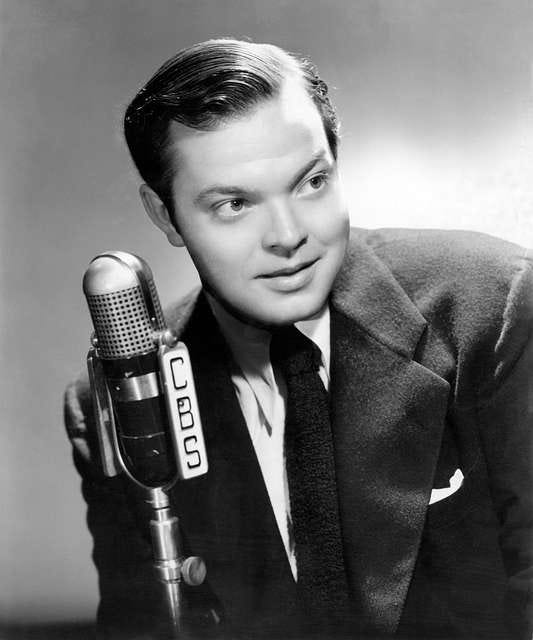
In the story, aliens come down from Mars and land in the real-life town of Grover’s Mill, New Jersey. Listeners to the radio play hear an actor portraying a newscaster called Carl Phillips, who begins by interviewing a scientist but quickly finds himself in the middle of the action.
“Ladies and gentlemen, it’s indescribable”
As Carl Phillips takes the listening audience out to the site where the Martian ship has landed, he describes everything he sees—and it’s not good.
“Good heavens, something’s wriggling out of the shadow like a gray snake. Now it’s another one, and another. They look like tentacles to me. There, I can see the thing’s body. It’s large, large as a bear and it glistens like wet leather. But that face, it . . . Ladies and gentlemen, it’s indescribable. I can hardly force myself to keep looking at it,” he says. Shortly after, listeners can hear explosions. A few minutes after that, it’s reported that Carl Phillips has been killed.
It’s a scary story, but what made it even scarier was that some people believed it was actually happening, said Gail Jarrow, author of SPOOKED! How a Radio Broadcast and The War of the Worlds Sparked the 1938 Invasion of America.
“You’re there. You’re on the scene. You’re listening. And then people start to get killed, and you hear it on the radio,” Jarrow said on a recent episode of That’s Terrible!
Mass hysteria?
“People are listening to this, and some of them missed the introduction and didn’t realize this was a radio drama. They thought, ‘oh my goodness, this is really happening. This is a news story. It’s happening,’” Jarrow said.
Some people ran to warn their neighbors that Martians had landed. Others called family members to say goodbye because they thought the world was ending. Some even got into their cars and headed West because they wanted to get as far away from the Martians as possible. But some were skeptical and called their local police or even the radio station to verify the story.
“Most people, when they called somebody, found out this wasn’t real,” she said. “But there were people who didn’t bother to verify.”
The fallout
The next morning, newspapers from across the country reported about the mass panic over the broadcast.
Radio Play Terrifies Nation, wrote the Boston Daily Globe
Thousands Flee, Pray and Weep as Radio War Play Panics U.S., wrote the Baltimore Sun
Radio Listeners in Panic, Taking War Drama as Fact, wrote The New York Times
So did thousands really panic after hearing the broadcast? Well, maybe, but probably not. There’s no way to know how many people were even listening to The Mercury Theatre on the Air that night, much less believing the story. But people sure believed what the newspapers reported.
“Newspapers had stories about how crazy people had been, and other people who saw that and read about were really disgusted by their fellow Americans,” Jarrow said. “How could people have acted so stupid?”
Some readers wrote letters expressing how upset they were that anyone could be so gullible to believe a radio play was real.
The lesson
It can be really difficult to tell the difference between truth and fiction, and it’s a worse problem now than it was in 1938, Jarrow said.

“There’s so much coming at us from all sides—from advertisers that want us to buy things, from people that want us to think certain things…friends that might want you to think certain things about someone in your class or your school, and a lot of this is lies,” she said. “You, receiving this information, really have to stop and say, ‘Wait a second.’ Is this right? Is this true?”